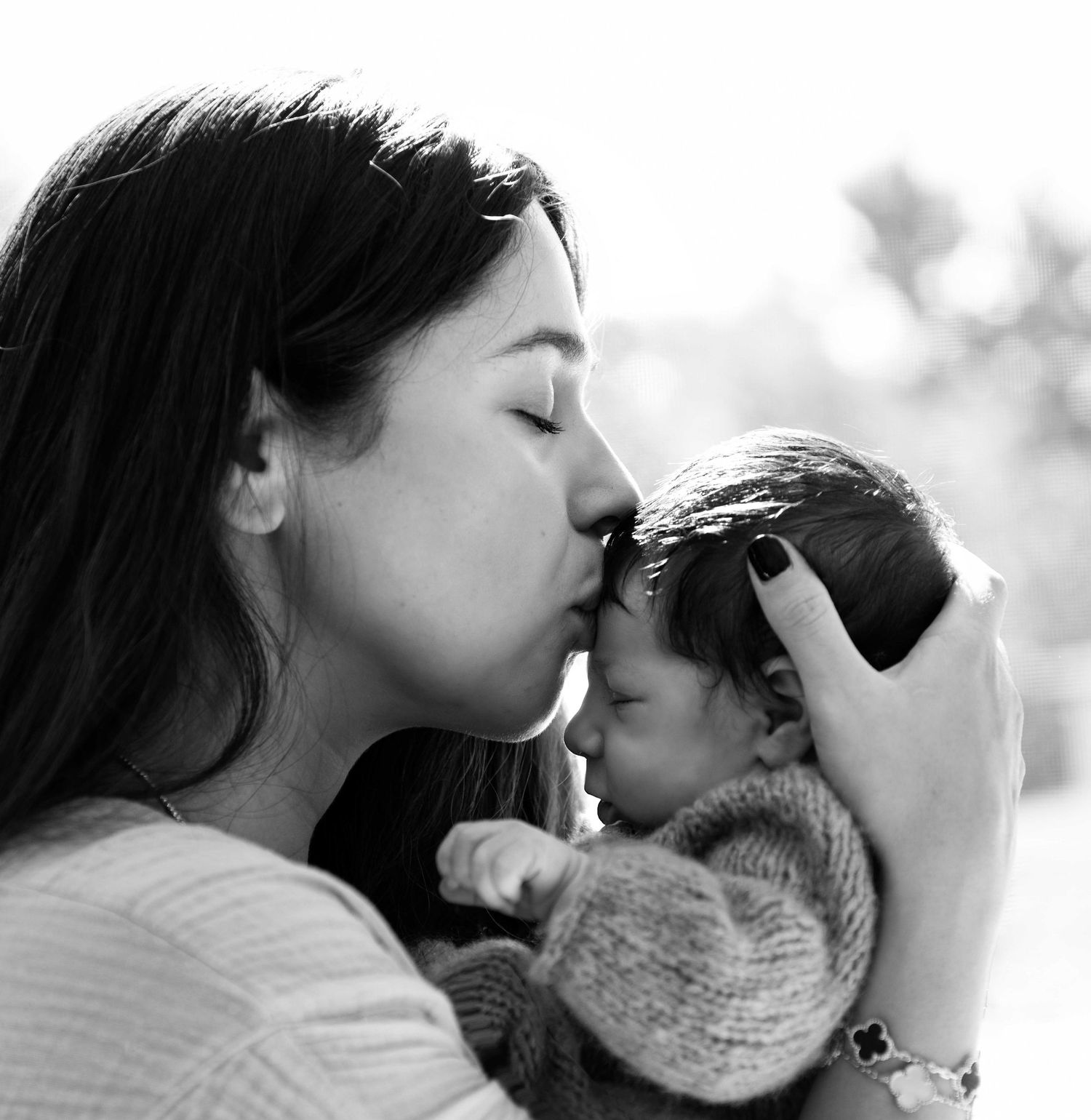
Learning Your Baby’s Language, One Moment at a Time
As a mom, I didn’t learn how to understand my newborns all at once. I learned them slowly, by living with them, holding them, feeding them, and watching them day after day. Each of my children was different. One slept deeply, one woke easily, one cried loudly, one barely cried at all. And yet, underneath those differences, the signals they used to tell me what they needed were surprisingly similar.
Over the years, and with guidance from expert women I deeply respect such as midwives, doulas, and lactation advisors, I began to understand something simple but powerful: babies are always communicating. They don’t use words, but they use their bodies, their sounds, their rhythms. When we learn to notice these patterns, caring for a newborn feels a little less overwhelming and a lot more connected.
This post is for you if you’re pregnant and preparing for your baby’s arrival, or if you’re already holding your newborn, tired, loving, and Googling answers in the quiet hours. You are doing the right thing. You’re learning a new language.
Understanding Your Baby’s Sleep Rhythms

Newborn sleep is not like adult sleep, and that can be one
of the biggest surprises for new parents.
Babies move in and out of sleep frequently, and each stage tells you something different.
Sometimes your baby is very still, breathing deeply, with relaxed arms and legs.
This is the kind of sleep where your baby is hardest to wake. Other times, they sleep lightly.
You might notice fluttering eyelids, tiny movements, facial expressions, or brief noises. This lighter sleep
is normal and important.
You may also notice your baby smiling in her sleep. These smiles are often small and fleeting, just a gentle turning up of the corners of the mouth. They tend to appear during light sleep, often during REM (Rapid Eye Movement )or what researchers call active sleep, when the brain is very busy. Scientists believe these smiles are linked to early brain and nervous system development. There is still much we don’t fully understand, but research shows this kind of sleep plays an important role in how the brain matures in the earliest weeks.
Learning to recognize these sleep rhythms can help you know when to pick your baby up, when to her rest, and when she might be about to wake on her own. Over time, you’ll notice patterns. Certain times of day when your baby settles more easily, or moments when she needs a little extra help to fall back asleep.
When Crying is Communication, Not a Problem

Sometimes your baby isn’t hungry or tired. Sometimes
he is simply searching for connection. He may
make brief sounds, look around, or move his body gently.
This is your baby asking, are you there with me. Attachment research shows that when parents
notice and respond to these small signals, babies begin to feel safe and understood.
These everyday moments of connection help support emotional development and trust.
These moments are not about fixing anything. They are about responding.
A voice, a hand on his chest, eye contact, or holding him close can be enough.
Over time, these small responses build emotional security.
Feeding Time as a Conversation
Feeding is one of the most intimate ways you get to know your baby. Whether you are breastfeeding,
bottle feeding, or doing a combination of both, your baby communicates in similar ways.
Before feeding, many babies show early hunger cues. In very young newborns, these cues are often subtle
and largely reflexive. You may notice increased alertness, gentle head movements from side to side,
or rooting. Hand to mouth movements can appear too, but in the earliest days they are often involuntary
rather than a clear sign of hunger. Crying is usually a late hunger signal, not a failure on your part.
Studies show that feeding works best as a two way interaction. Babies signal interest, pauses, and fullness through their body and behavior, and parents who respond to these cues help support regulation and bonding. This is true for both breastfed babies and bottle fed babies.
Every feeding journey is valid. What matters most is that feeding feels safe, responsive, and supportive for both of you.


When Your Baby Is Looking for You
Sometimes your baby isn’t hungry or tired. Sometimes he is simply searching for connection.
He may make brief sounds, look around, or move his body gently. This is your baby asking, are you there
with me. Attachment research shows that when parents notice and respond to these small signals,
babies begin to feel safe and understood. These everyday moments of connection help support
emotional development and trust.
These moments are not about fixing anything. It is about responding. A voice, a hand on his chest,
eye contact, or holding him close can be enough. Over time, these small responses build
emotional security.
What I Notice as a Newborn Photographer
As a newborn photographer in the suburbs of Philadelphia, I have the privilege of meeting babies in their earliest days. When parents arrive at my studio, I always ask simple questions. How does your baby usually sleep. How do they let you know they’re hungry. What seems to soothe them.
Once I begin photographing, my attention is first and always on the baby’s safety. Right after that, I pay close attention to what the baby is telling me. Their breathing, their muscle tone, their facial expressions. As I wrap or gently move the baby into poses, I listen to their cues.
This is what baby-led photography means to me. I never force a pose a baby resists. I work with their comfort, their rhythms, and their needs, while still doing my best to capture the poses parents love. When babies feel safe and respected, it shows in the images.

Gentle Signs to Help You Learn Your Baby’s Language
- As you and your baby get to know each other, here are a few gentle signs to watch for.
- When your baby slowly turns their head or brings hands to their mouth, they may be telling you they are ready to eat.
- When their body relaxes, breathing deepens, and movements soften, they may be ready for rest.
- When sounds become louder or more urgent, they may be asking for quicker support.
- When they calm at the sound of your voice or your touch, they are telling you that you are their safe place.
- And remember, you don’t need to get it right every time. Learning your baby’s language is a relationship, not a test. With time, patience, and love, you will understand each other more deeply than you ever imagined.
A Gentle Reminder
If something about your baby’s feeding, crying, or behavior doesn’t feel right to you, trust that feeling. You know your baby best. Reaching out to your pediatrician or a trusted medical professional is always the right step when you need reassurance or guidance.
About the Images in This Post
Black and white photography allows us to focus on expression, movement, and emotion in a very pure way. In this post, I chose black and white images to highlight the subtle cues babies use to communicate. If you’re curious to see newborn portraits in color, you can view my full newborn photography portfolio here.